
Local SEO for Service Businesses: The Complete Guide (2027)
When someone needs a plumber, a locksmith or a cleaner, they rarely scroll far. They search on Google, glance at the map, read a few reviews and call. If your business is not on that short list, the job goes to a competitor.
Updated October 2026 · 10 min read
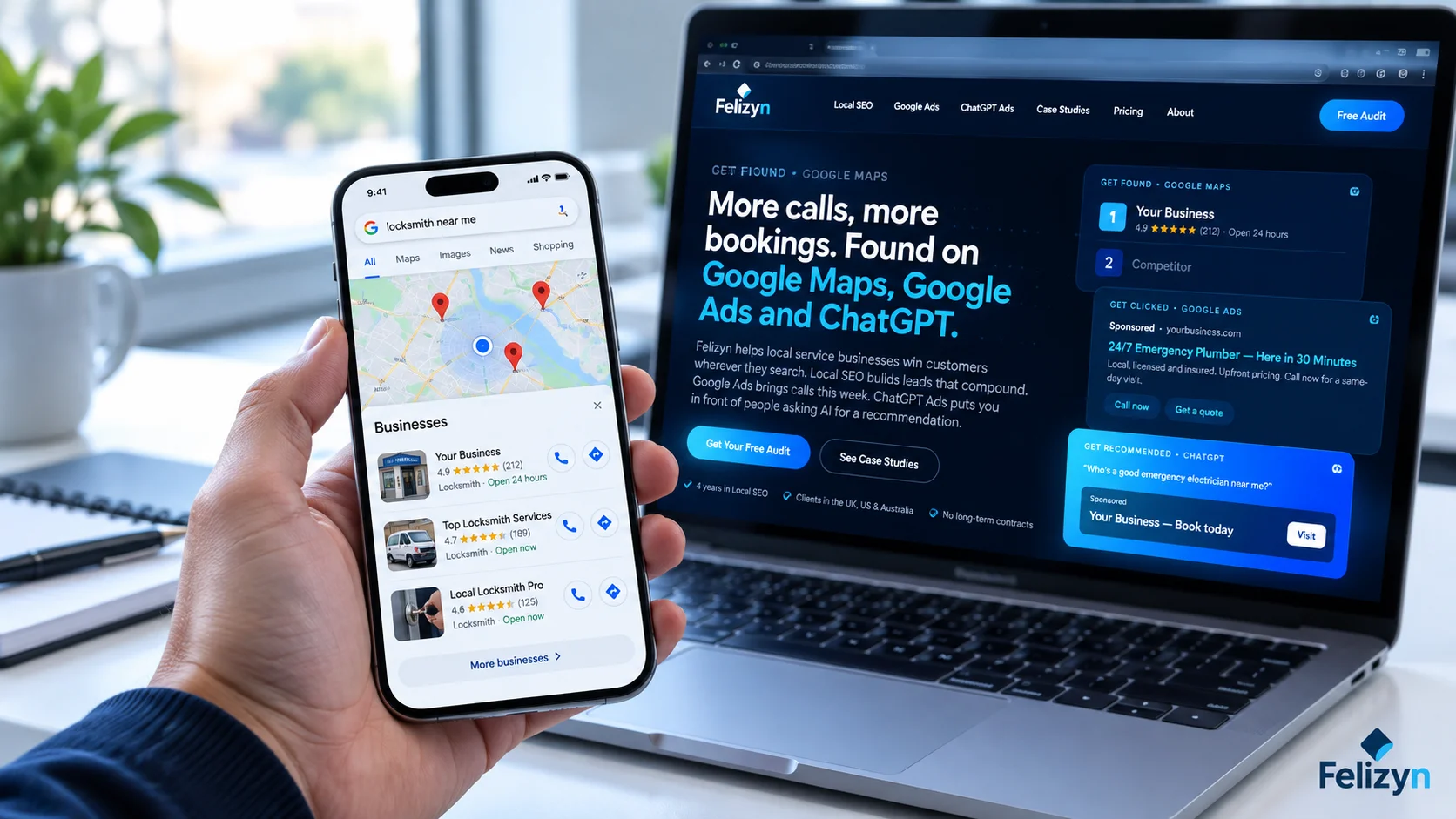
Want this done for you?
This guide shows you how local SEO works for service businesses in 2027, step by step. It is based on four years of hands-on work for clients in the US, UK and Australia, including a UK repair shop that earned 773 clicks in three months with zero backlinks.
Local SEO for service businesses is the work of getting found when nearby customers search for your services on Google Search, Google Maps and AI tools like ChatGPT. The core steps are: optimize your Google Business Profile, build clear service and location pages, earn steady reviews, keep your business details consistent online, and write content that AI tools can easily quote.
Key takeaways
Your primary Google Business Profile category is the top Map Pack ranking factor.
Whitespark, 2026 Local Search Ranking Factors
of consumers read reviews for local businesses. Reviews decide who gets the call.
BrightLocal, Local Consumer Review Survey 2026
of consumers used AI tools for local recommendations, up from 6% a year earlier.
BrightLocal, Local Consumer Review Survey 2026
backlinks needed for 773 clicks in 3 months when pages and profile are strong.
Felizyn client result, UK
What is local SEO?
Local SEO (local search engine optimization) is the process of making a business show up in search results tied to a place. It covers four spots on the screen:
The Local Pack
The map with three businesses at the top of Google.
Google Maps
Results inside the Maps app.
Local organic results
The normal blue links for searches like “emergency plumber Leeds.”
AI answers
Google AI Overviews, Google AI Mode and ChatGPT, which now name local businesses directly.
Local SEO fits any business that serves customers in a set area. That includes plumbers, HVAC contractors, locksmiths, electricians, cleaners, removalists, lawyers, dentists, salons, clinics and real estate agents.
The big difference from regular SEO is location. Google must understand what you do, where you work and why people trust you.
How does Google decide which local businesses to show?
Google ranks local results on three main factors: relevance, distance and prominence. Google confirms this in its own guide to local ranking.
Relevance
How well your profile and website match the search. A “24-hour locksmith” profile is more relevant to “locked out at night” than a general hardware store.
Distance
How close you are to the searcher, or to the place named in the search.
Prominence
How well known and trusted you are. Reviews, ratings, mentions on other websites and your overall web presence all count.
You cannot change distance much. But you can control most of relevance and prominence, and that is where local SEO earns its money.
Industry experts agree on what matters most. In Whitespark’s 2026 study, 47 local SEO experts scored 187 factors. They ranked your primary Google Business Profile category first and proximity to the searcher second for Map Pack rankings. They also reported that links keep losing weight in local results (Whitespark).
Top 10 Map Pack ranking factors
Expert importance score for each factor in the 2026 Local Search Ranking Factors survey.
Source: Whitespark, 2026 Local Search Ranking Factors (47 experts, 187 factors).
How do you optimize your Google Business Profile?
You optimize your Google Business Profile (GBP) by choosing the right categories, completing every field, adding real photos, posting weekly and collecting reviews. Your GBP is the listing that appears in the Local Pack and on Google Maps, so it is usually the fastest win.
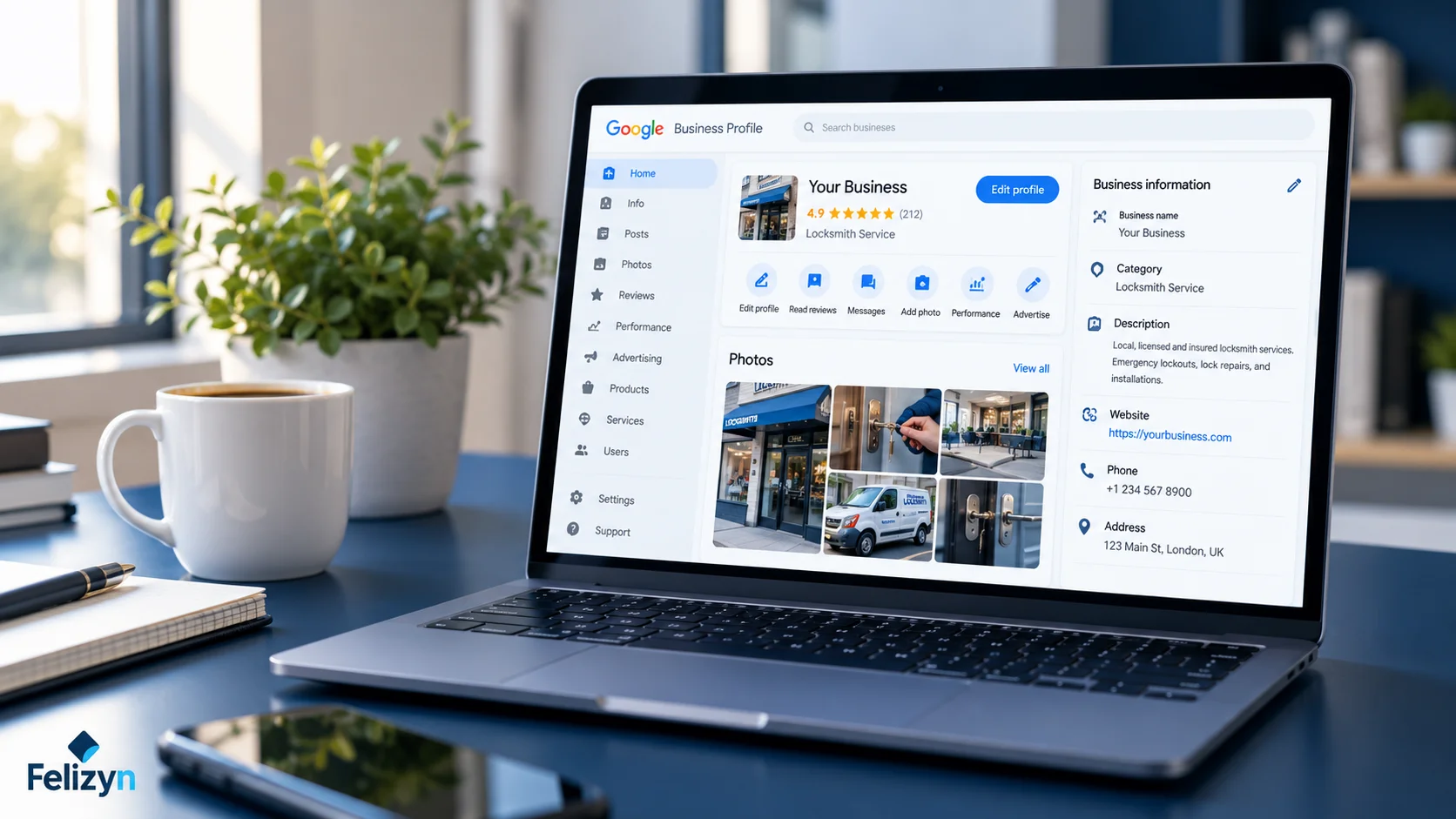
Start with these steps:
Pick the most accurate primary category
“Locksmith” beats “Security system supplier” if locksmithing brings in most of your work. Add secondary categories for other services.
Set your service area correctly
If you visit customers and do not serve them at an address, hide your address and list the towns or postcodes you cover.
List every service
Add each one with a short, plain description.
Write a clear business description
Say what you do, where you work and why people choose you. Skip keyword lists.
Upload real photos
Show your team, vans, tools and finished jobs. Stock photos add nothing.
Post every week
Share offers, recent jobs and tips. An active profile signals a real, working business.
Keep hours accurate
Add holiday hours so customers never call a closed business.
calls from the Business Profile in July 2026
more calls than July 2025
We used this process for Car Keys Express, a mobile car locksmith in Melbourne. The profile went on to generate 109 calls in a single month. Our full Google Business Profile optimization checklist breaks down each step.
Want us to optimize your profile for you?
Get a free audit of your Google Business Profile, website and competitors.
What pages does a service business website need for local SEO?
A service business website needs a home page, one page per main service and one page per main area served. Each page should answer one need clearly.
Service pages
“Emergency Lockouts,” “Boiler Repair” or “End of Lease Cleaning.” One service per page lets Google match the page to the search.
Location pages
“Plumber in Footscray” or “Electrician in Brampton.” Each must include real local detail, such as jobs done nearby, travel times and local landmarks. Copy-paste pages with only the town name swapped tend to get ignored.
About page
Who you are, your licences, insurance and years in business. This builds trust with both people and Google.
Contact page
Your name, address (or service area) and phone number, plus a map and a form.
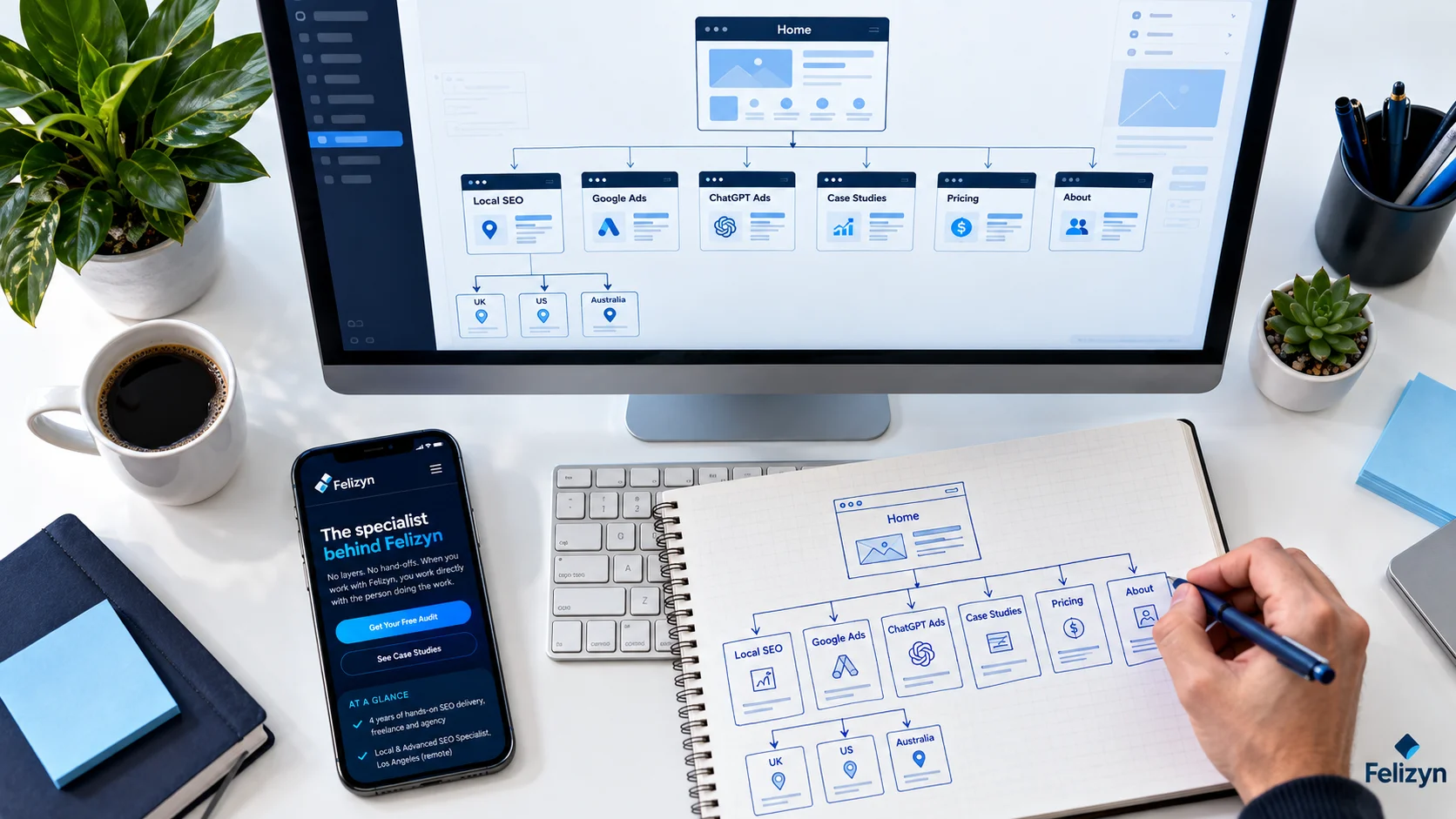
If you cover many towns without an office, read our guide to ranking in multiple cities.
What on-page and technical SEO does a local business need?
A local business needs clear page titles, fast mobile pages, consistent contact details and schema markup. These basics help Google read your site and help customers act on it.
- Title tags: put the service and location near the start, such as “Emergency Plumber in Leeds | 24/7 Callouts.” Keep it under 60 characters.
- Headings: use real questions people ask, like “How much does a lockout cost?” Answer each one in the first two sentences below it.
- NAP consistency: your Name, Address and Phone number must match your GBP exactly on every page.
- Schema markup: add LocalBusiness (or a type like Plumber or Locksmith) and FAQPage schema. Schema labels your details so search engines and AI tools can read them with confidence.
- Speed and mobile: most local searches happen on phones. Compress images and test pages in Google PageSpeed Insights.
- Click-to-call: put a tappable phone number at the top of every page.
Service + location first · under 60 characters · a reason to click
This is the work most agencies skip. They write blog posts but never fix the title tags, schema or slow pages holding the site back. At Felizyn, I handle the technical and on-page work myself, because that is often where the quickest gains hide.
How do reviews and citations help local rankings?
Reviews and citations help local rankings by proving to Google that your business is real, active and trusted. They feed the “prominence” factor, and reviews also turn searchers into callers.
What customers expect from your reviews
only use businesses rated 4 stars or higher
won’t use a business with fewer than 20 reviews
only consider reviews from the last 3 months
expect business owners to respond to reviews
How recent do reviews need to be?
Source: BrightLocal, Local Consumer Review Survey 2026 (1,002 US consumers).
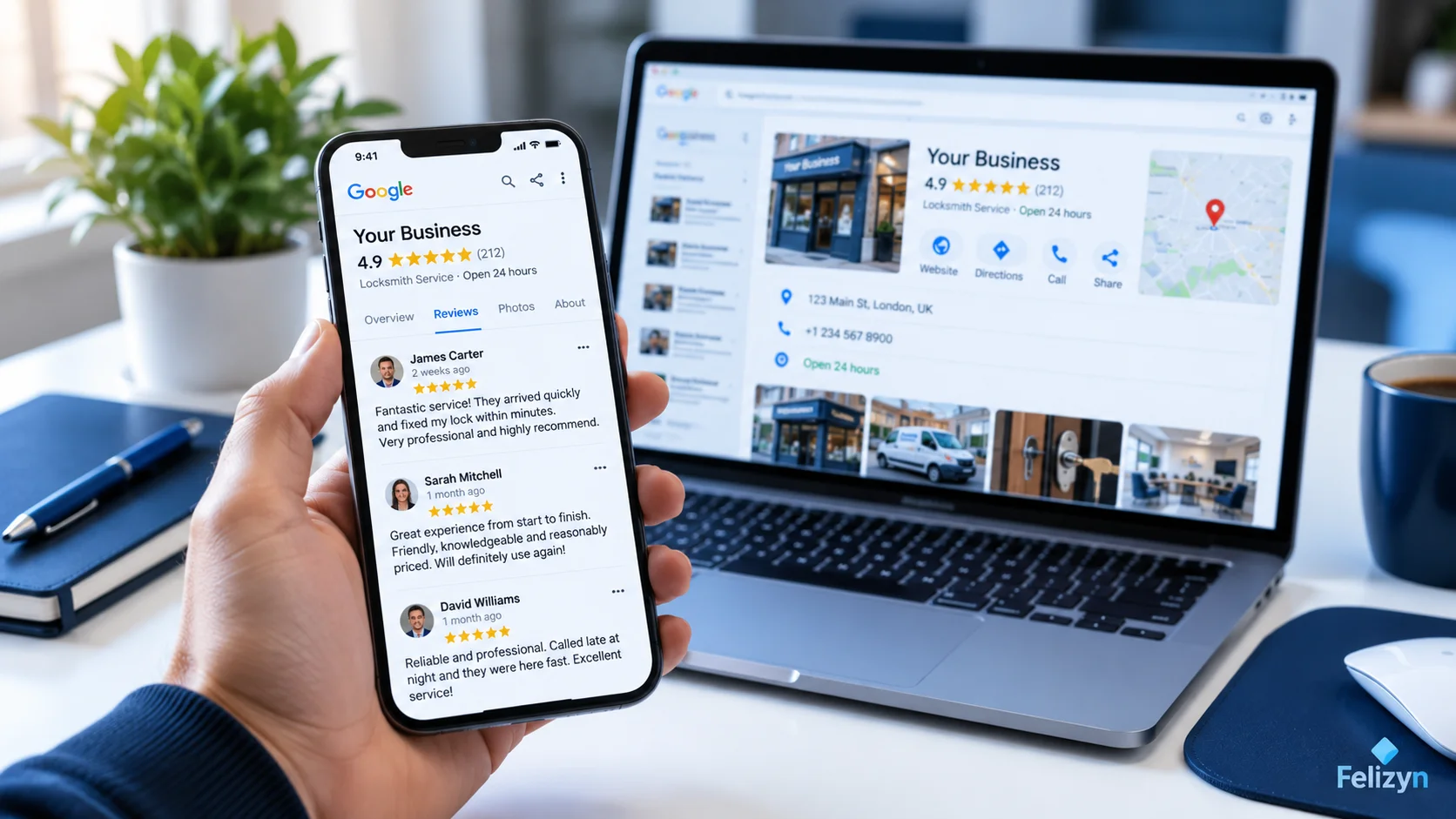
accurate listings on trusted sites
listings on spammy directories
Quality beats quantity here. Twenty accurate listings on trusted sites do more than 200 on spammy directories.
How do you show up in AI search like ChatGPT and Google AI Overviews?
You show up in AI search by making your business easy to verify and easy to quote. AI tools pull from your Google Business Profile, your website, reviews and trusted third-party sites. Then they recommend the businesses they can describe with confidence.
of businesses in Google’s Local Pack were missing from Google AI Mode for the same search.
Source: Local SEO Data, June 2026 (1,120 local searches, 13 US cities).
Source: BrightLocal, Local Consumer Review Survey 2026.
This matters more each month. A June 2026 industry study of 1,120 local searches found that 28.5% of businesses in Google’s Local Pack were missing from Google AI Mode for the same search (Local SEO Data). Ranking on the map no longer guarantees you get named in AI answers.
To improve your AI visibility, also known as AEO (answer engine optimization) or GEO (generative engine optimization):
Answer questions directly
Put a one- or two-sentence answer under each question heading, like this guide does.
Use FAQ sections and schema
These give AI tools clean, labeled facts to pull from.
Be specific
Name your services, towns, prices (or price ranges), licences and years in business.
Earn mentions elsewhere
Local news, industry sites and directories help AI tools confirm you exist.
Keep reviews detailed and recent
AI summaries often quote what reviewers say.
Test it yourself
Ask ChatGPT or Google AI Mode “best [service] in [town]” every month and note who gets named.
Our guide on getting recommended by ChatGPT and Google AI Mode covers this in more depth. You can also see how we run ChatGPT Ads alongside organic AI visibility.
Case study: 773 clicks in three months with zero backlinks
clicks from Google Search
impressions in three months
backlinks, citations or paid ads
The business: Midlands Lawnmower Repairs, a lawnmower repair specialist in the UK Midlands.
The goal: grow search traffic without paying for ads or link building.
What we did: on-page SEO and content SEO only. No backlinks, no citations and no paid ads. I carried out all of the SEO work myself.
The result: 773 clicks and 37,200 impressions from Google Search in three months.
The lesson: many local businesses do not need expensive link building to grow. Clear service pages, strong titles and helpful content that answers real customer questions can carry a site a long way, especially in niche trades.
Is local SEO different in the US, UK, Australia and Canada?
The core of local SEO is the same in every country: Google Business Profile, a strong website, reviews and consistent citations. What changes is the list of directories that matter and the way people search.
United States
United Kingdom
Australia
Canada
Use local spelling on location pages (“optimisation” for UK and Australian audiences) and show prices in local currency.
How long does local SEO take to work?
In our experience, most service businesses see early movement in Google Business Profile views and calls within 4 to 8 weeks. Steady, lasting gains usually take 3 to 6 months. Busy markets, like plumbers in London or lawyers in Los Angeles, can take longer.
Early movement
More Business Profile views and the first extra calls.
Steady gains
Rankings settle in for your main services and areas.
Compounding
Rankings you earn keep working. They don’t switch off when you stop paying.
Local SEO keeps compounding. Unlike ads, the rankings you earn do not switch off the day you stop paying.
Frequently asked questions
Is local SEO worth it for a small service business?
Yes, for most service businesses. One new customer from a plumbing, locksmith or legal search is often worth hundreds or thousands of dollars. Local SEO brings these leads without a cost per click.
Can I do local SEO myself?
Yes. You can set up and manage your Google Business Profile, ask for reviews and fix your contact details yourself. Technical fixes, schema and content strategy are where expert help usually pays off.
Do I need a physical office to rank in Google Maps?
No. Service-area businesses can rank in Google Maps without a public address. You hide your address and set the areas you serve instead.
Do backlinks matter for local SEO?
They help, but less than most people think. Experts in Whitespark’s 2026 study reported link signals continuing to decline in local results. Our UK case study grew to 773 clicks in three months with no backlinks at all.
What is the difference between local SEO and Google Ads?
Local SEO earns free, lasting visibility over time. Google Ads buys instant visibility that stops when your budget runs out. Many businesses use both. See our guide to local SEO vs Google Ads.
How much does local SEO cost?
Most agency retainers fall between about $500 and $3,000 a month, depending on competition and scope. See our full breakdown of local SEO cost in the US, UK, Australia and Canada, or view Felizyn’s plans.

Faisal Khonglah is the founder of Felizyn, a local SEO and paid ads agency for service businesses. He has four years of hands-on local SEO experience, including agency work at GLP Marketing in Los Angeles. He handles technical, on-page and Google Business Profile work for clients across the US, UK and Australia.
Ready to get more calls from local search?
Felizyn helps service businesses rank in Google Maps, local search and AI answers, with no long-term contracts. Get a free local SEO audit and see exactly what is holding your business back.